
Holy shit. We’re already at the last day of 2025 and I haven’t done any of my usual year-end posts. As per usual, my concerts stretched well beyond a single post, so we’re going with the big-ish bands and venues today and take the indie shit later this week. Then Camptathalon will crop up some time in mid-January.
Nathaniel Rateliff
My first concert of the year was all the way back in February. Hardly seems to count as part of 2025 proper. Concerts are for summer, people!
Fortunately, I jotted down some of my thoughts at the time, so this might be marginally representative of what actually happened.
Nathaniel Rateliff has been on my short list of acts to see for some time now. Wife got us tickets for Christmas and she was kind enough to accompany me despite not knowing many of his songs.
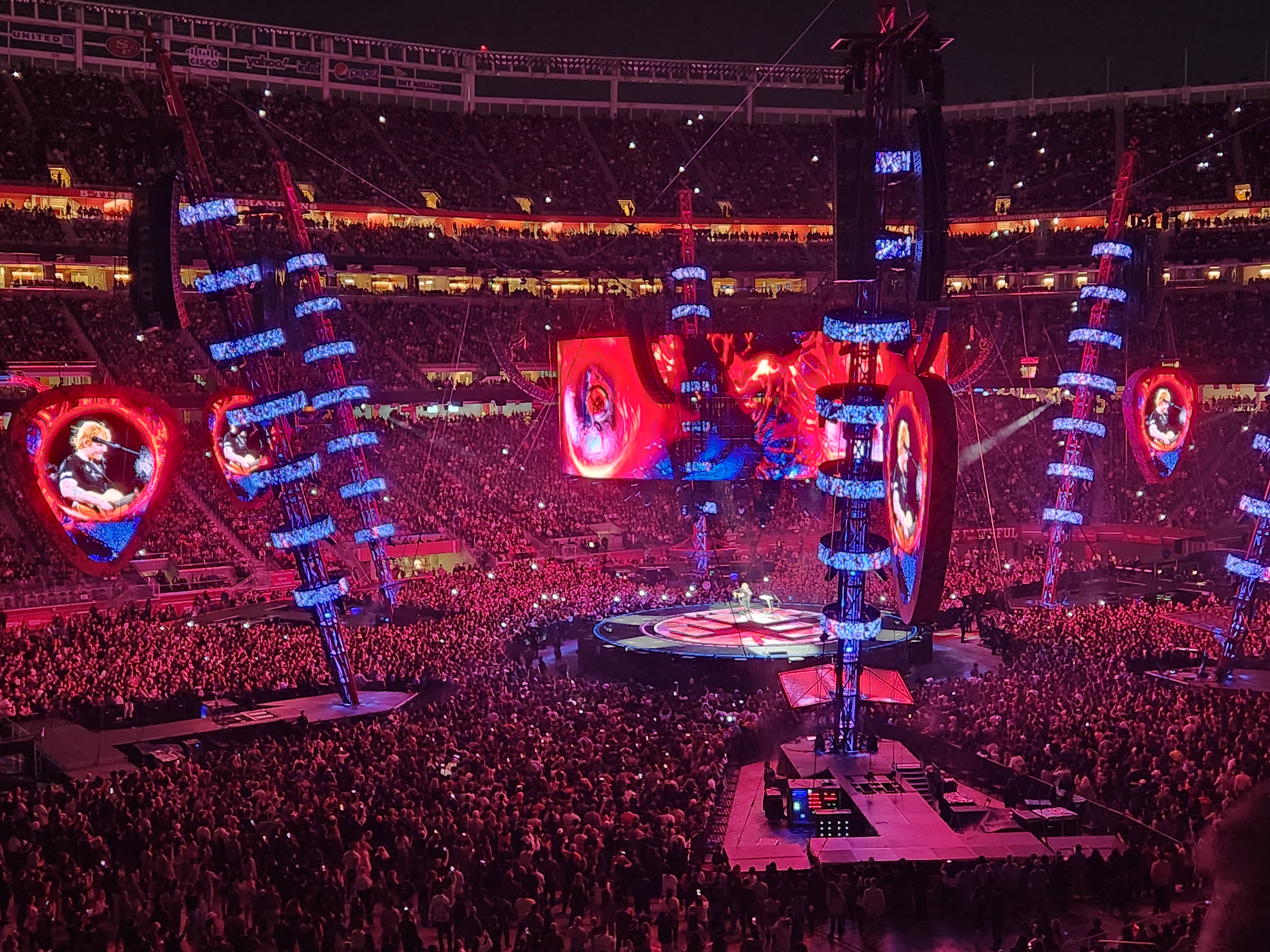
We went through a similar situation a few years ago at Ed Sheeran. I knew maybe three or four of the songs he performed. For Nathaniel Rateliff, we set the over/under on songs Wife would recognize at 3.5. She claimed to hit the under.
I don’t know how that’s possible. I mean, when one of us listens to music, the other is often right beside us in the car or the house or whatever. Yet somehow she knew pretty much every Ed Sheeran song, including one that was a Justin Bieber song, and I made it through a Nathaniel Rateliff concert knowing all but a couple songs, despite not owning any of his albums, but each of our other halves were utterly clueless.
The only difference was the “And One” for Sheeran was a bit pricier than Rateliff.
Nathaniel Rateliff is kind of a fascinating story. If we played the “How many times in the multiverse” game with Nathaniel Rateliff having a music career, this reality might have Dr. Strange holding up the “one” finger.
While attractiveness isn’t necessary for recording contracts, it certainly helps. A level of fitness, too, which he doesn’t seem to have. Yet everything about Nathaniel Rateliff makes him more suited to be a bookie standing on the docks in the background of a mafia movie than a multi-gold and -platinum selling musician.
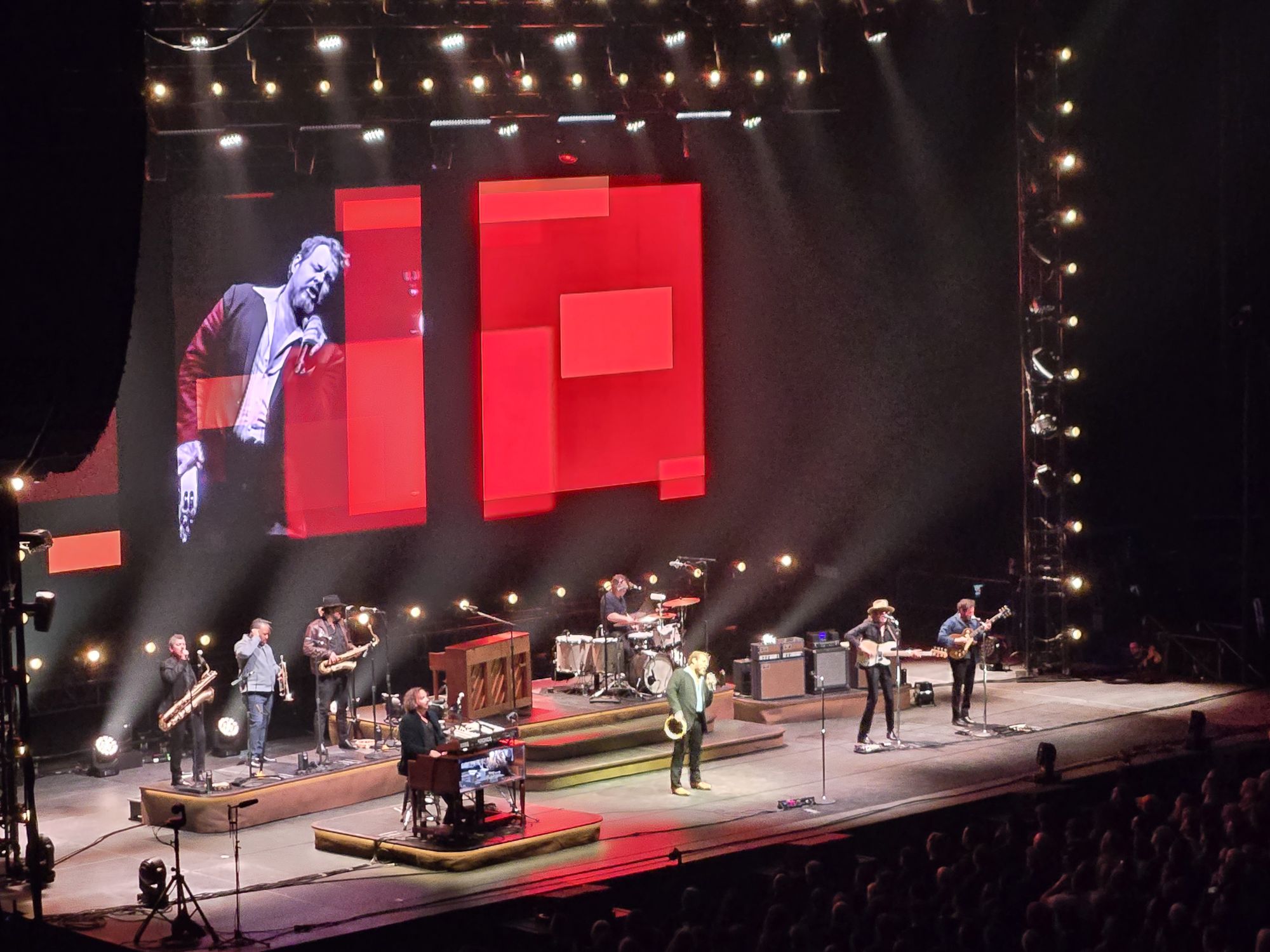
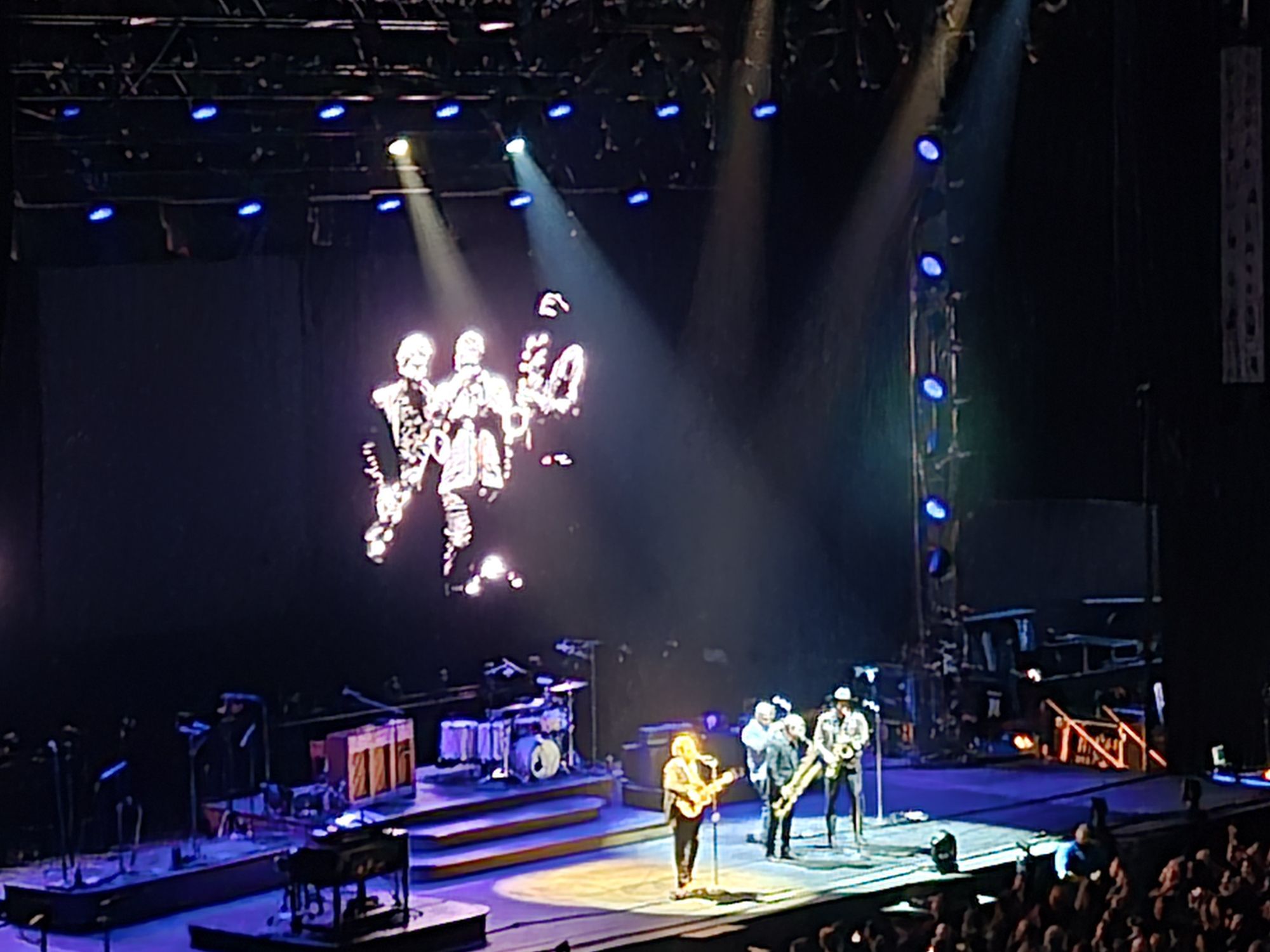
Adding to his unlikeliness is that he was almost 40 years old by the time he had a legitimate recording deal. In sports terms, we’d say that’s far beyond the stage when someone goes from “prospect” to “suspect.” He was 37 when “S.O.B.” hit. Taylor Swift is two years younger than that now and already had to divide her career into “eras” to differentiate which ex-boyfriend each song is about. Nathaniel Rateliff’s like the Kurt Warner of the recording industry. How close was he to bagging groceries before “S.O.B” signed him to back up Trent Green?
I do believe there are other portions of the multiverse where he at least gets “S.O.B.” recorded and then becomes a one-hit wonder.
Or maybe he is a one-hit wonder in this universe? My wife probably thinks so.
He kinda reminds me, both in voice and mannerism, or Joe Cocker. Maybe a little bit of Meatloaf, too. So I might not have been as surprised if he became a musician in 1978. Just not in this century.
This time warp also worked for the venue we saw him in, the San Francisco Civic Auditorium. Man, this place must’ve been spectacular in the 1970s, or more likely the 1950s. Unfortunately, my ass ain’t the same size as a 1950s ass. It looks and feels like a multi-purpose room at any high school. Most of the seats were in a U-shape around what probably works as a dance floor sometimes, although today it had seats (can’t remember if they were folding chairs), some on the floor but others on risers leading up to the permanent seats, which started maybe twenty feet off the ground, accessed from the second floor.
The auditorium has been renamed after Bill Graham. I assume it’s Bill Graham, the concert promotor, not Billy Graham the televangelist. I always thought it was odd that the two had the same name. Grateful Dead, brought to you by Billy Graham? What the hell? Buy shrooms from the guy who believes you’ll go to hell for using shrooms. At least he’s cutting out the middle man.
At the front of the dance floor, there was a cordoned-off section that was literally designated as “Pit.” Like, there were signs and stuff. I’ve been in a few pits in my life and most of them aren’t officially designated thus. If you gotta ask if you’re moshin’, ya ain’t moshin’. Then again, with the average age of this particular crowd, myself included, there wasn’t likely to be much moshing. And they probably needed signs because if the directions were in an app, half of us would complain about downloading it and the other half would get lost trying to authenticate it. Then we’d all complain about the price of beer.
Speaking of beer, I had one at the concert. It was in the $13 range. Then they gave me one of those “The machine is going to ask you a question” about tip statements. As per usual, the lowest tip option available was 20%. I could’ve also gone up to 25% or even 30%. But the lowest option, when put into dollars and cents, was about $2.50. Look, I’m all for tipping for good service, but what the hell did she do? She pulled a can out of a tub of ice and then she pulled the tab on it. Is that worth $2.50?
Not to get all old and crochety, but back in my day, there were legitimate debates about whether or not opening a beer was worthy of a tip at all. Seems you should have to actually make a drink to get tipped. Stirring the tonic into the gin is the service for which I am tipping. Pulling something out of the refrigerator and then handing it to me is labor, not a service. And that’s when I was only giving you the change from my $5 bill, not some bullshit $2.50!
Hold on, a one dollar tip on a $4 beer is… let’s see, carry the seventeen, round up to…
Regardless, handing me a can ain’t worth $2.50. And given the average age of the crowd in attendance, I couldn’t have been the only person who took the extra time to write in a custom tip of a dollar. Except those older than me might not know how to do that.
Let’s see, I talked about the venue, I talked about the beer. Anything I missed? Oh right, how was the concert?
It was really good! Even if my wife only knew two songs.
I derisively compared him to Joe Cocker and Meatloaf earlier. But you know what? Joe Cocker was a damn good singer. And Meatloaf wrote some great songs. Nathaniel Rateliff can sing like Cocker and write songs like Meatloaf. With the folky guitar picking of an early 1960s Timothee Chalomet. Oops, sorry, I meant Bob Dylan.
Trust me, that joke woulda slayed back in February when I thought of it.
He’s also got some of the relentless raspy energy of 1980s-era Bruce Springsteen. And I thought that up before he ended his main set with a cover of “Dancing in the Dark.” Unfortunately, without Courtney Cox.
You know that last song energy? Sometimes it’s the last two songs of a concert. Many groups keep it going throughout the entirety of the encore, while some slow down the middle of the encore only to reach the height again.
Nathaniel Rateliff hit that height maybe four or five times throughout the concert. A lot of his songs started out slow then grew to big endings. Unfortunately, one dingbat in front of me decided to stand up for every goddamn one, including a couple that didn’t build toward anything but stayed balladic the whole time and then she just looked like the only fucking moron in the section that didn’t know that song stays like that.
Mumford and Sons
I remember thinking, either during or shortly after that Nathaniel Rateliff concert, that that whole “end of the concert” energy, which Rateliff hit about 30% of the time, accounts for about 90% of a Mumford and Sons concert.
When I initially made the connection, I didn’t even know Mumford was going to tour this year. Whereas most tours are not only planned, but already on sale, over a year in advance, this showed up out of nowhere. After five years of nothing, they announced a new album in March along with an, oh by the way, we’re touring starting like, I don’t know, tomorrow. I just double checked my email and, sure enough, the tickets for their Berkeley show went on sale April 3. The concert was June 10.
In contrast, I bought Ed Sheeran tickets this past September for a show next July. And when we bought Taylor Swift tickets, we bought them twelve months in advance, and those had already been on the secondary market for three months. And in a foreign country, to boot.
And yes, I know, Mumford & Sons doesn’t have the appeal of Ed Sheeran and Taylor Swift. But it’s not like they’re some obscure indie outfit. Furthermore, they cater to a fan set of middle-aged men, who have a ton more disposable income than the other two.
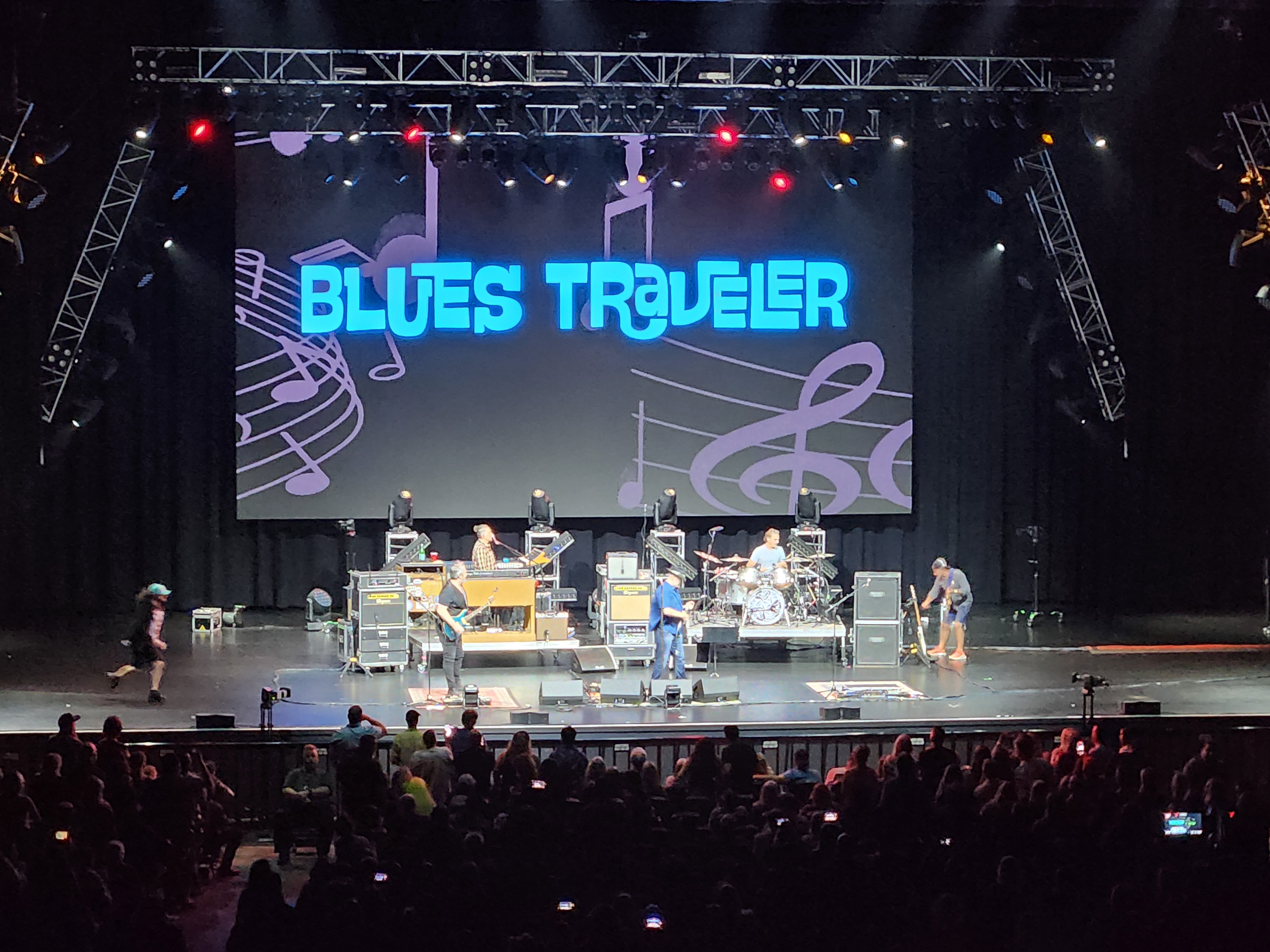
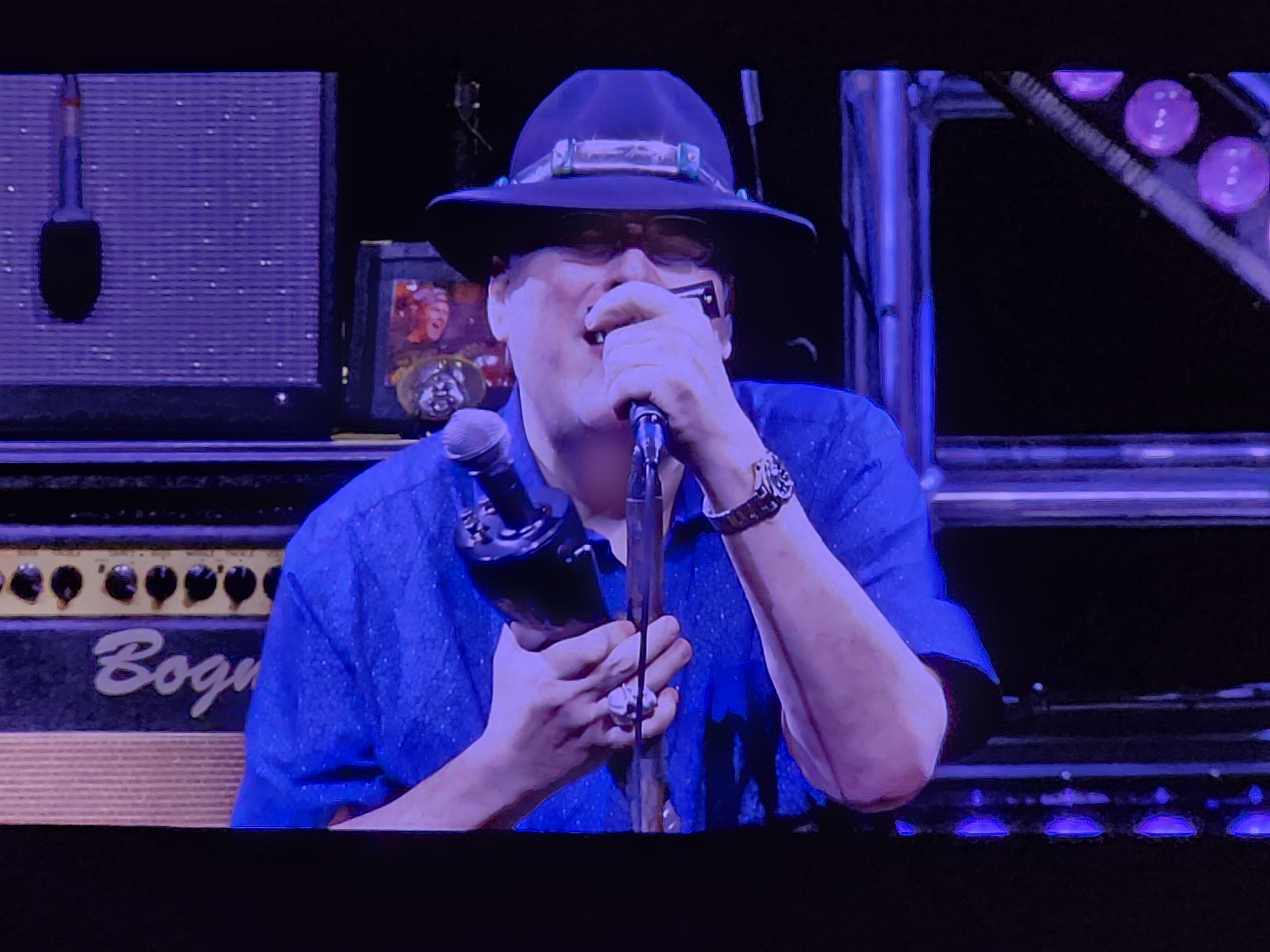
This is the fourth time I’ve seen Mumford & Sons. Somewhere around the second or third time, I remarked that I’d see them any time they were touring, and figured that it was only a matter of time before they passed Blues Traveler as the band I’ve seen most often. Then they stopped touring for a half-decade and kicked one of the guys out of the band. It’s a good thing they didn’t tour much in the past five years, because for a large portion of that time, I would’ve given them a hard “meh” and looked up if Blues Traveler was coming to town.
Part of that is because, as talented of a musician as Marcus Mumford is, I’m kinda tired of how full of himself he is. In fact, the album that came out this past year was mostly drivel. I know it’s trope for musicians to become more boring as they age. One might easily forget that Sting was part of a cutting edge punk rock trio. I won’t reference the name, because I don’t want him to look them up and decide he has to cancel such misogynistic lyrics as “Every woman I date becomes my mother in the end.”
Speaking of cancellations, which of course “never” happened around 2020, Mumford has one less Son these days. Their banjo player was following a conservative on social media, so of course he couldn’t be associated with the band anymore. Nowadays many of us realize that maybe we went too far with the whole cancel culture. But magically, none of those affected have gotten their jobs back or anything. Including the only banjo player anybody’s ever heard of.
Interestingly, the last time I saw them, which was in March of 2019, I remember remarking that the banjo player didn’t seem as into it as the other three. A noob suggested maybe that’s just his schtick, being the aloof one. But I responded that no, I’d never noticed any of them going through the motions the other times I’d seen them. So maybe he was just as ready to be canceled as they were ready to cancel him.
Of course, they’ve hired another banjo player. Even if they didn’t put any banjo in their new album, they’d still be expected to play it at concerts. And the new banjo player is… fine, I guess? As a banjo player. The biggest drop isn’t in the banjo department, but in the harmonization. Most of their songs contain four-part harmony, and… now they only have three. I know we’re on Winter Break right now, but to my recollection, three is less than four.
I encourage you to check out Mumford & Sons at the SNL 50th Anniversary. They sound thinner than used to. Then again, everybody sounded terrible on that broadcast.
Regardless, I was skeptical I’d ever rush out to see them again. Then I got the notice for an artist presale and, well, next thing I knew I was heading to the Greek Theater in Berkeley, which is a beautiful outdoor arena that dates back decades. It’s a stone bowl, one of the few bowls in all of Berkeley that doesn’t contain weed. The acoustics were probably perfected two millennia ago and you’re sitting on stone benching like a goddamned Roman!
(Edit: Probably Greek, not Roman, huh? Just like Hercules)
So blame it on Nathaniel Rateliff, but yeah, the concert was, well, what can I say? These guys fucking rock. Marcus Mumford may be a sanctimonious prig who wrote a song about people’s obsession with their online persona (“Blind Leading the Blind”) then fired his banjo player eighteen months later over an ephemeral social media thing, but damnit if he can’t work a crowd.
And sure enough, that “end of concert” energy that most bands hit maybe twice over a two-hour set is pretty much the norm for a Mumford concert. They might not start every song at that level, but by the first chorus they’re at 90% and by the bridge, they’ve gone to eleven.
And they don’t even need to change costumes to get there.
Sorry, couldn’t help a little dig at the Eras Tour there. In fact, when Marcus Mumford did his usual run into the crowd (something I forgot he did – one benefit of going five years without seeing them in concert), I pulled out my phone to record, muttering to my friend that it was to show my daughter because “Taylor Swift doesn’t do that shit.”
Not that Taylor Swift could or should do that. Her fans are a tad more rabid and she might not make it back to the stage.
But still, those videos show the energy level of a Mumford concert. I worry and wonder what they’ll be like when he slows down a bit. I’ve always heard that the first time guitar players start getting lazy is doing up and down strokes instead of just down. Glad to report that Marcus is still primarily doing downstrokes. I’ll check again when he gets past forty.
Maybe he won’t slow down. Does Elton John still do his schtick? I haven’t seen him since the 1990s. As long as Marcus keeps that bass drum at his foot. Because, you know, the singer/guitar player should also be the metronome. At the front of the stage.
The crowd at a Mumford concert knows all the words and sings along to everything. I know it’s cliche for bands to stop singing and let the crowd take over during the chorus of their most popular songs. Marcus drops out of pretty much any song at any point. I think he cut out for almost an entire verse of “Believe,” which probably wasn’t even one of their top ten singles, and the crowd kept the lyrics and rhythm the entire verse.
The one song we didn’t sing along to was off their next album. They told us last June that, after five years off, they were going to have back-to-back albums. I think I saw them before “Wilder Mind” came out and they similarly played an upcoming song. The difference was this time they actually put the lyrics up on the screen. So I know the song was called “Icarus” this time. Couldn’t tell you what the song they played back in 2014 was.
The one down part of the show is intentional, when the four… oops, three of them come back out into the crowd to do an acoustic set surrounding a single microphone. You can practically hear a pin drop when it happens. And they’ve gotten better at informing us. Last time I saw them, when they only did one song, Marcus went into how he really, really needed us to be quiet during this portion of the show, which lead to many karens shushing others for simple applause or a quick hoot, not realizing their shushing is equally, if not more, disruptive to enjoying the song.
This time he said the great thing about their fans is that we can be the loudest, most energetic crowd anywhere. “And then you can also all shut the fuck up.”
The funniest part was when they were deciding which song to do for their third acoustic song. Someone shouted out Timshel. To which Marcus replied, “We just played Timshell, love.” Then he might’ve called her a twat.
Oddly enough, despite having toured in the United States for fifteen years, they still haven’t figured out that cunt isn’t as accepted of a word in this country than in theirs.
Two other addendums from this concert: Considering we were in the Bay Area, I was really hoping to hear their cover of “Friend of the Devil.” It’s frigging awesome. Unfortunately, it’s not on any of their albums. Also unfortunately, they didn’t feel Jerry Garcia’s hometown was a great place to do a Grateful Dead cover. Instead, we got Simon and Garfunkel’s “The Boxer.” Which is already on one of their albums.
And it always begs the question: why does Paul Simon say “Come-ons from the whores on 7th Avenue” like it’s a bad thing?
The other addendum was the opening band, which was called Divorce. I commented to my friend that I hoped they weren’t good, because I didn’t want my search history to show my wife that I had been looking up Divorce recently. Unfortunately, they were pretty fucking good. Fortunately, I haven’t gone looking for them again.
Seriously guys, you might want to think about a name change. Even if people aren’t intentionally avoiding searching for your name, you realize you’re not going to show up in, like, the top thousand search results, right?
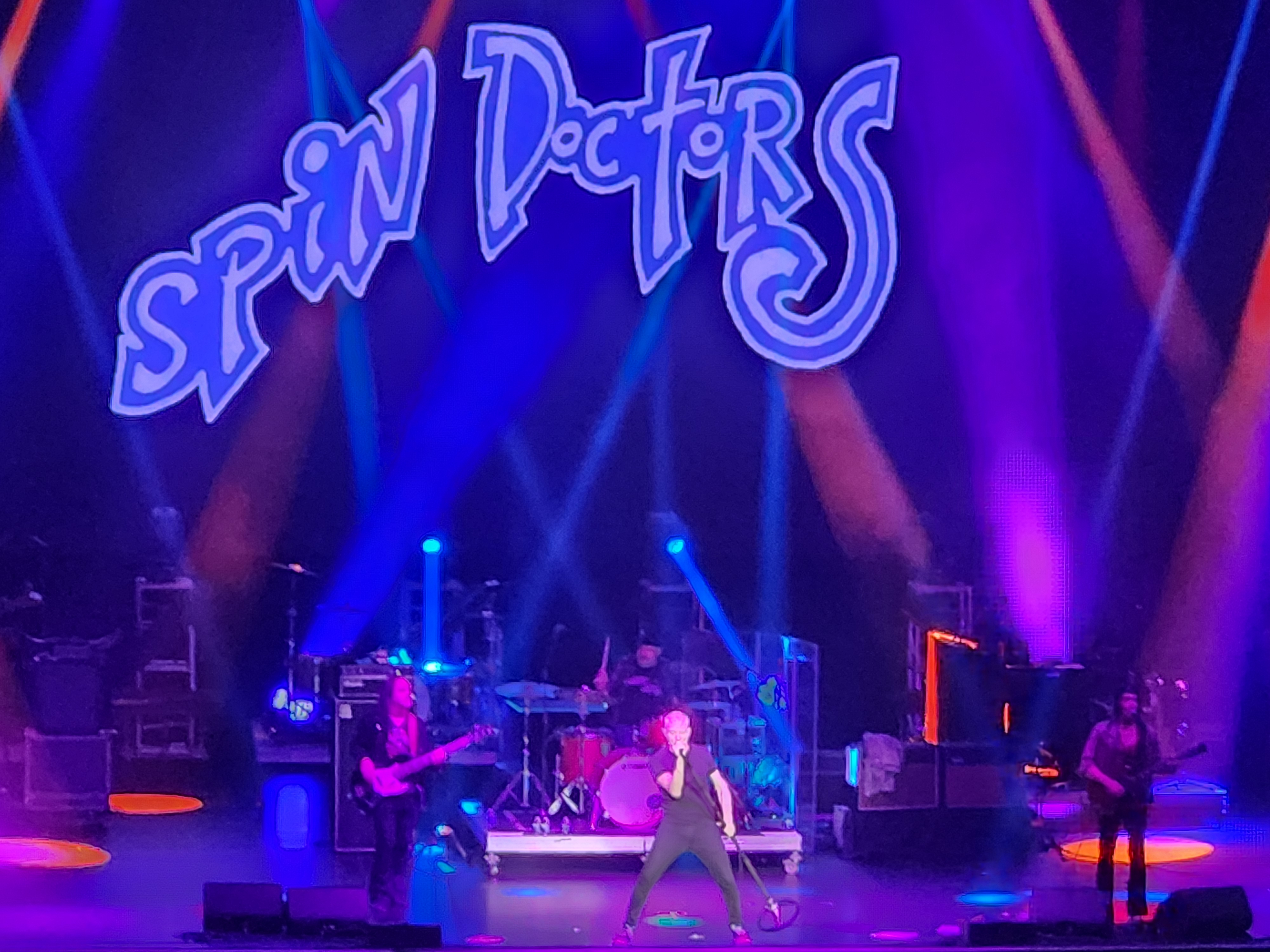
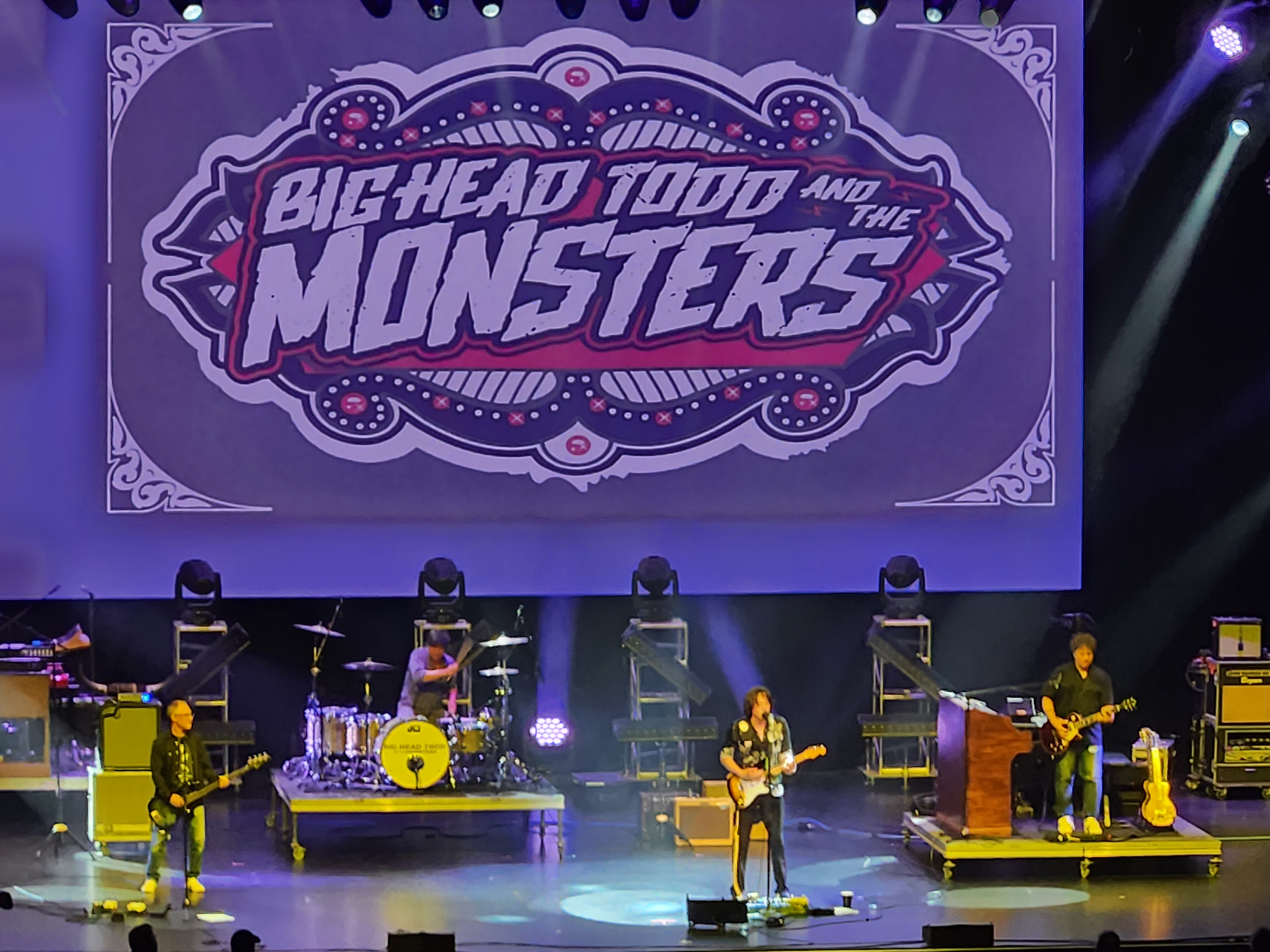
I’ll be back later with my takes on: OAR, Air Supply, Lake Street Dive, and the 502s



 The Writing Wombat